Antonio Stradivari
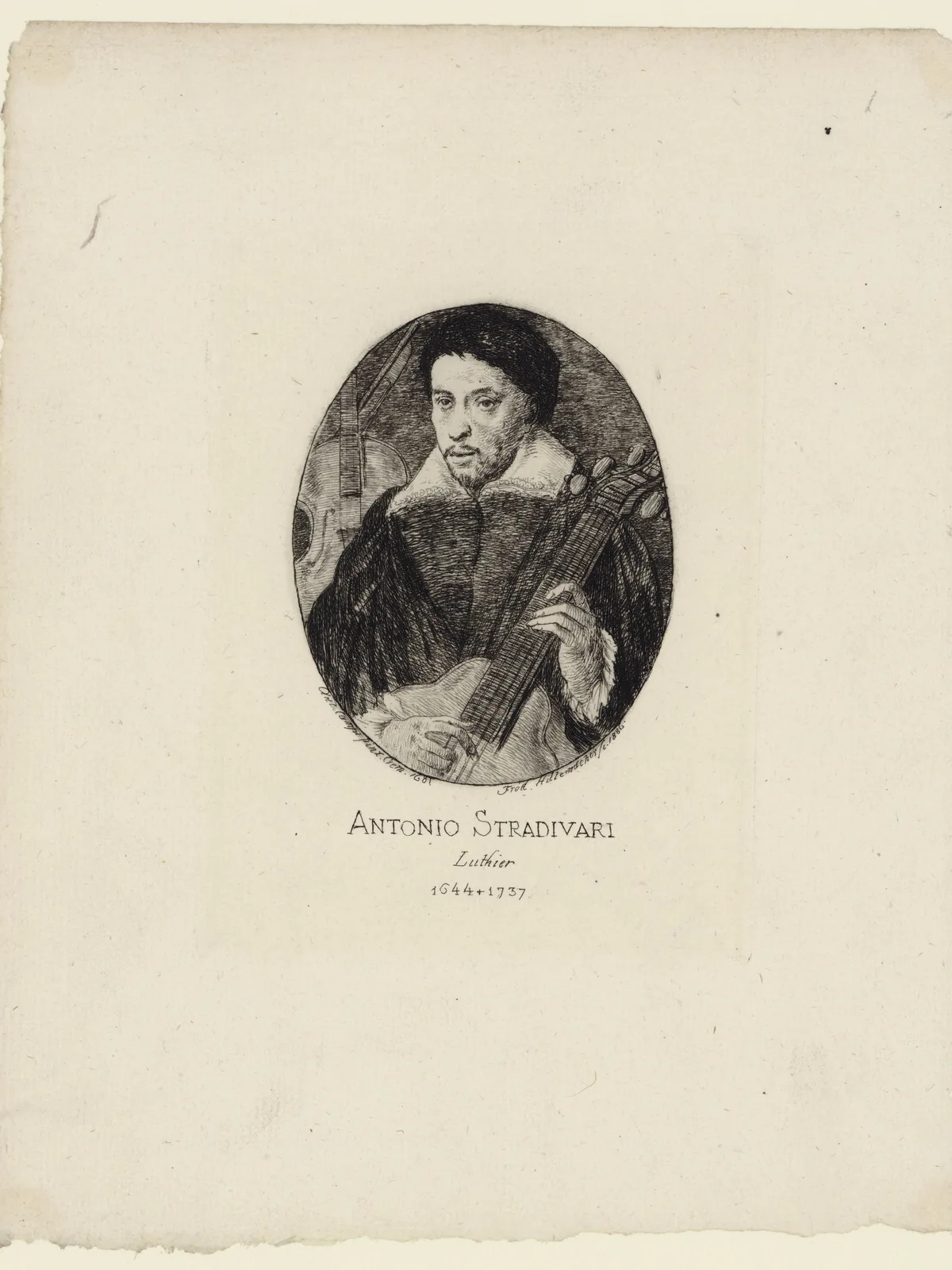
Antonio Stradivari was born in 1644, and died in 1737, and in his 93 years, he established himself as the greatest violin maker in the history of mankind. He was born in Italy, and worked in Cremona for the majority of his life. Although he was Italian, he would inscribe his violins with Latin slogans, hence, the violins became known as Antonius Stradivarius violins, or merely Stradivarius violins, rather than Stradivari violins. His mentor was believed to be Nicolo Amati, who also came from a very famous family of violin-makers.

The reason why the <a href="/stradivarius-violins/">Stradivarius violins</a> are so expensive and famous, is because of the quality of their sound. Many musicians have not only owned the violins, but have preferred them over any other violin. The sound of these infamous violins resonate beautifully, and produce very powerful tones. They are rich, refined, and deep in sound, and project very clearly over a distance. These violins are thought of as good-quality instruments, and musicians delight in playing them, for they are very easy to play on. They are responsive to the touch of a finger, and one does not feel like he or she needs to press firmly in order to produce a sound.
Some of the Stradivarius violins differ in quality and sound, however. Not every single Stradivarius instrument sounds the exact same, or is as good as the other. There are some which are believed to be of better quality than others. No one truly knows exactly why the sound of the Stradivarius violins is so wonderful, but there are many theories as to what makes a violin a good violin. The quality of the wood is a definite factor, as well as the shape of the instrument, the thickness of the wooden plates that are placed in the belly and the back of the instrument, and the varnish of the wood. Even though no one really knows how exactly he formed his violins, or what methods he used, it can definitely be said that he incorporated advanced geometry and mathematics into his craftsmanship. He built over 1,100 instruments, but merely 650 of them survive today.
Updated & expanded — current sourced facts
The reference notes below were added by the Stradivarius Violins editorial team to bring the original article up to date with current, sourced facts (including modern auction records and present-day instrument locations). They supplement — and do not replace — the original article above. Valuation figures are reported market and auction history, not financial or appraisal advice.
Antonio Stradivari (c.1644–1737) was an Italian luthier from Cremona whose craftsmanship established the standard by which fine violins are measured. Born in the region of Lombardy during its golden age of stringed-instrument making, Stradivari is believed to have trained within or near the workshop of the renowned Nicolò Amati before establishing his independent practice by the 1680s. He adopted the Latinized form "Stradivarius" for the paper labels affixed to his instruments, a professional convention of the era that lent prestige to his work.
Over a career spanning more than five decades, Stradivari produced an estimated 1,000 or more instruments across multiple categories. While violins dominate his surviving output, he also crafted violas, cellos, and occasional harps and guitars. Several hundred of his pieces remain in existence today, distributed among collectors, orchestras, and institutions worldwide. His method was one of continuous refinement; he adjusted proportions, wood selection, and construction technique throughout his working life, gradually developing the designs for which he became celebrated.
The instruments produced during Stradivari's golden period, roughly 1700 to 1720, are widely regarded as his finest achievements. These violins are prized for their distinctive tonal qualities—particularly their clarity, responsiveness to the player's bow, and powerful projection in concert halls. The reasons underlying the acoustic excellence of golden-period Stradivaris remain subjects of scientific and musicological inquiry, with researchers exploring variables including wood aging, varnish composition, and geometric precision.
Stradivari's legacy rests not on innovation in isolation but on the disciplined mastery of an inherited craft and his systematic pursuit of refinement across a lifetime of instrument making.
This page updates and corrects an original stradivariusviolins.org article with current, sourced facts.
Sources: Library of Congress — Stradivari instruments / Whittall Collection; Smithsonian — National Music Museum / NMAH string instruments; W. Henry Hill, Arthur F. Hill & Alfred E. Hill — 'Antonio Stradivari: His Life and Work (1644–1737)'; The Metropolitan Museum of Art — musical instruments collection. Educational information only — not financial, investment, or appraisal advice. See our sources & fact-check policy.
Frequently asked questions
Born — antonio stradivari?
c.1644, probably Cremona, Italy
Died — antonio stradivari?
18 December 1737, Cremona
Trade — antonio stradivari?
Luthier (violin / string-instrument maker)
More in Antonio Stradivari
Explore the famous instruments
Compare the Messiah, Lady Blunt, Soil, Hammer and more side by side — type, year, period, value, and where they are today.
Compare Stradivari instruments →