The bridge of a violin
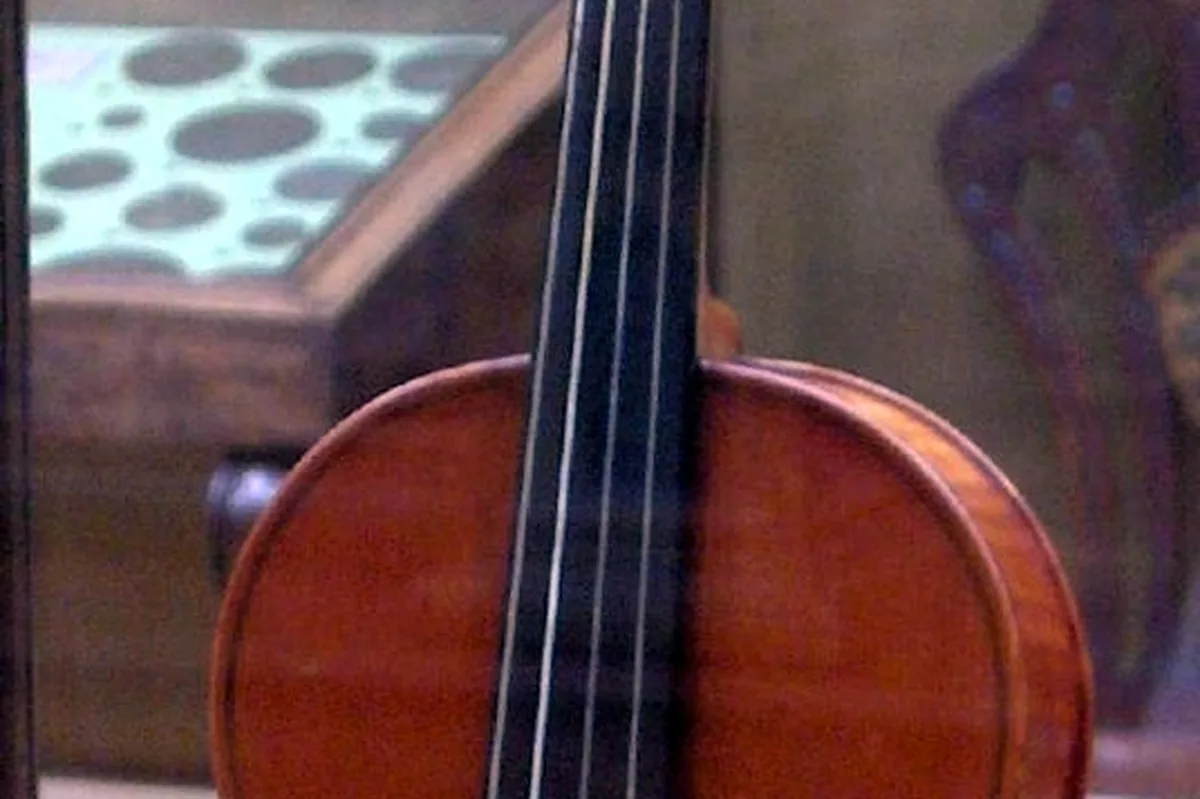
The bridge of a violin is the thin, carved piece of maple that stands vertically on the instrument's top plate, positioned between the tailpiece and the pegbox. Its primary function is to hold the strings at the proper height and spacing while transmitting their vibrations into the body of the violin. Because the bridge is the critical point of contact between strings and instrument, its shape, thickness, and the quality of the wood used all directly influence the violin's tone, projection, and responsiveness.
Unlike the violin body itself, the bridge is a replaceable component rather than a permanent fixture. A skilled luthier cuts and fits a new bridge to suit each individual instrument, adjusting its dimensions and curvature to optimize acoustic performance. Bridges require periodic replacement as they wear over time, gradually flattening under string pressure and losing their effectiveness. On a historic Stradivari violin, the bridge is necessarily modern, since no original bridge could survive centuries of use and tension. Nevertheless, luthiers shape modern bridges for these celebrated instruments with meticulous care, designed to unlock and release the full voice for which the instrument is known.
The Stradivari bridge exemplifies a broader principle in violin acoustics: the sound of a great instrument depends not solely on the age and provenance of its wood and construction, but equally on how the instrument is set up and maintained. A properly fitted bridge, renewed by an experienced hand, remains essential to realizing the tonal potential that the maker originally built into the instrument.
Sources: Tarisio — Cozio Archive of stringed instruments; Library of Congress — Stradivari instruments / Whittall Collection; The Metropolitan Museum of Art — musical instruments collection. Educational information only — not financial, investment, or appraisal advice. See our sources & fact-check policy.
Frequently asked questions
What is the the bridge Stradivarius?
It is a Stradivari topic (collecting) made in — (—). The carved maple bridge that carries string vibration to the body.
How much is the the bridge worth?
Reported value/sale: A replaceable part, yet vital to tone and playability. This is market history, not an appraisal or investment advice.
Where is the the bridge Stradivarius now?
—.
Why is it called the the bridge?
—.
More in Famous instruments & value
All famous instruments & value →
Compare the famous instruments
See type, year, period, value and current location side by side.
Compare Stradivari instruments →